
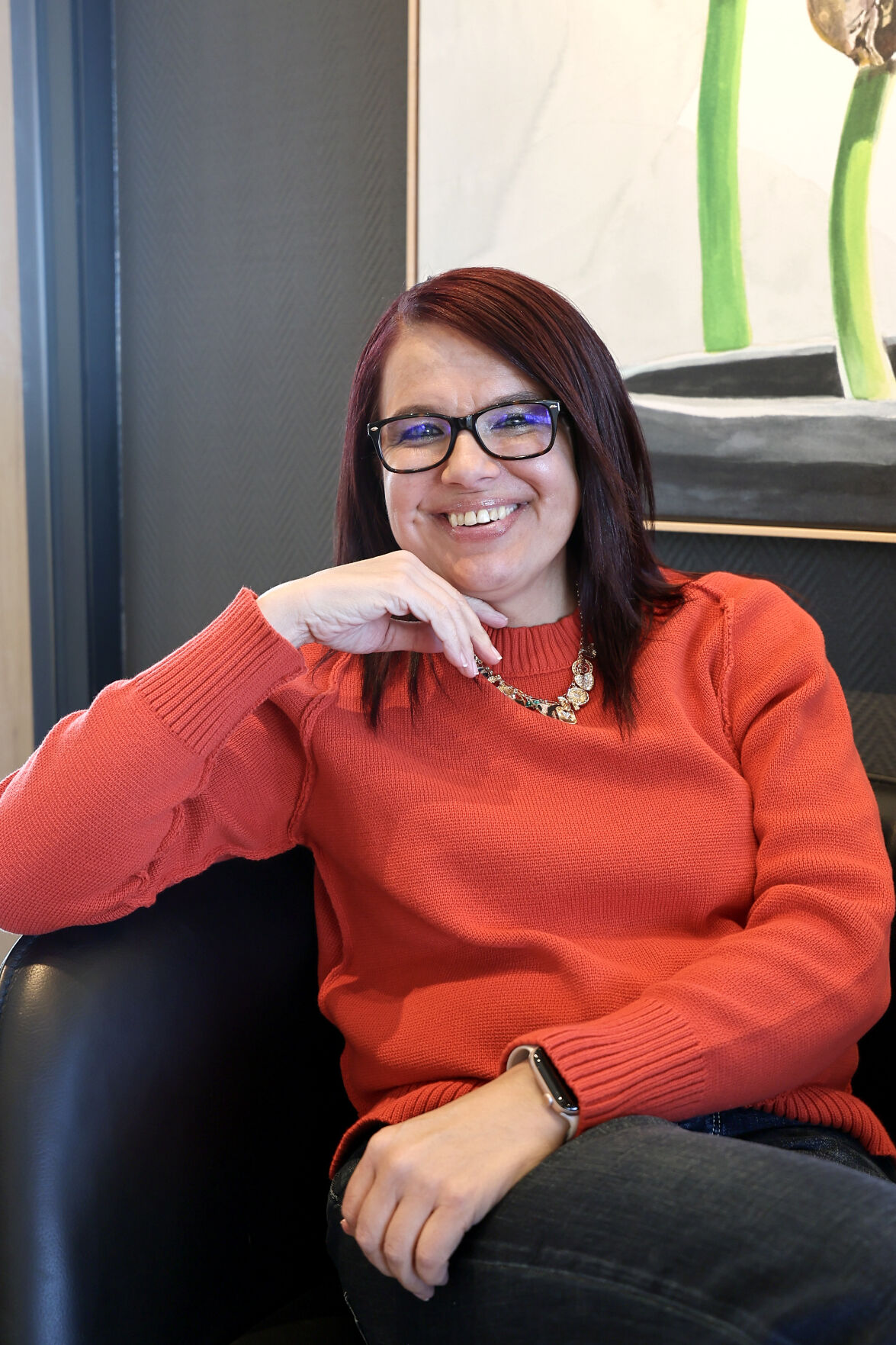
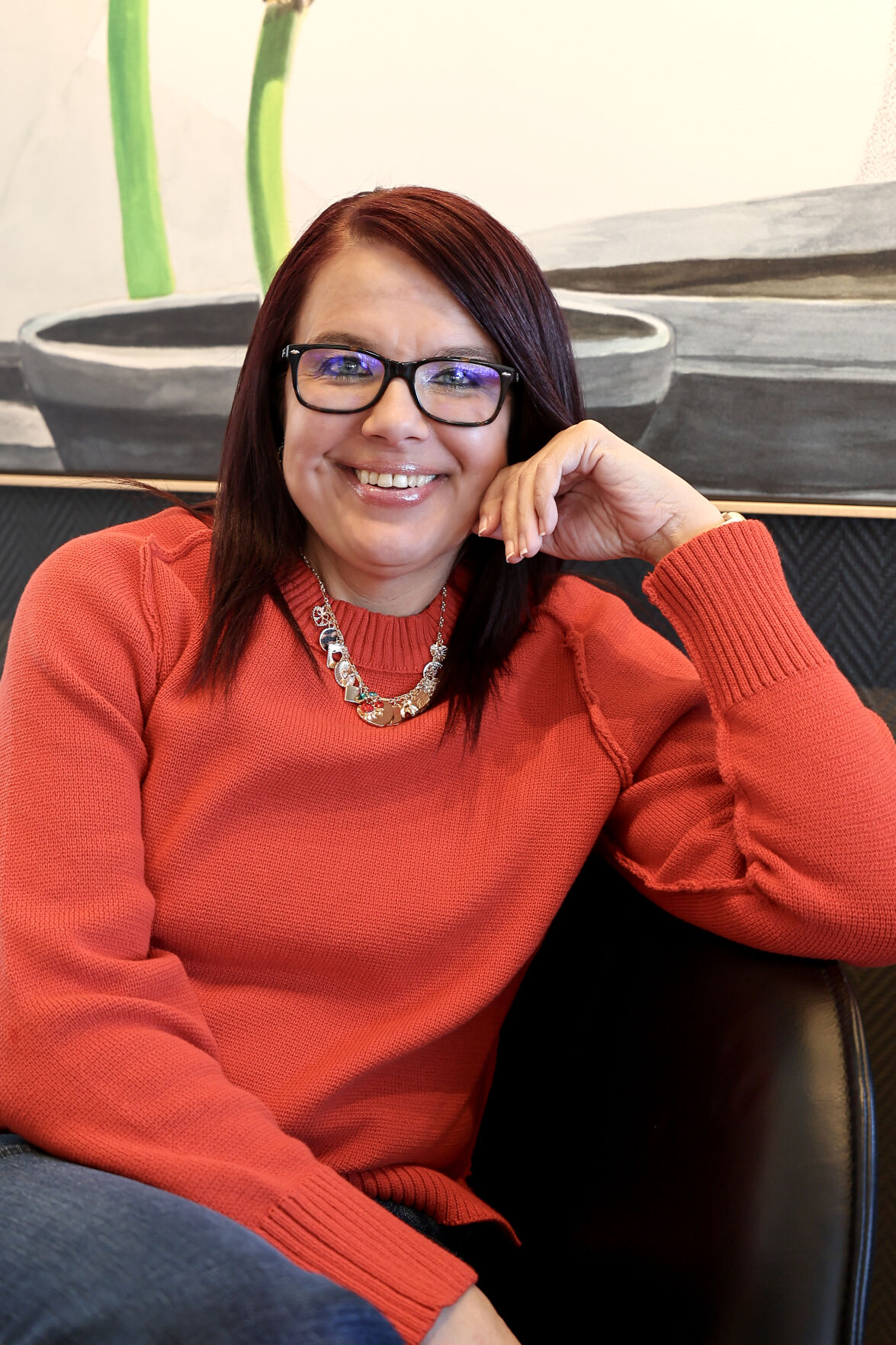
On Aug. 5, 2019, Jillean Harmon was sitting at her desk at John Deere Dubuque Works, where she has worked in material storage and retrieval for more than 20 years, when she suddenly felt light-headed.
The next thing she remembers is waking up in the emergency room with doctors and family members hovering over her.
“I didn’t know what had happened,” said Harmon, 46, who is from Dubuque but now calls Guttenberg, Iowa, home. “I was told that what I had experienced was a cardiac arrest, which is different from a heart attack. A heart attack is a plumbing problem, where blood flow to the heart is blocked. A cardiac arrest is an electrical problem, where the heart stops beating.”
After undergoing further testing through the University of Iowa Hospitals and Clinics — including for AFib, a rapid and irregular heartbeat — Harmon learned that what she had suffered from was Premature Ventricular Contractions, or PVCs, extra heartbeats that can produce a fluttering or skipping sensation that can be considered normal and often harmless in some cases.
She has since been diagnosed with Postural Orthostatic Tachycardia Syndrome, or POTS, a disorder of the autonomic nervous system that causes an increase in heart rate upon standing and resulting in symptoms including dizziness, lightheadedness, fainting, fatigue and brain fog.
It often is triggered by events such as a viral infection, surgery or pregnancy, and it is most common in women between the ages of 15 and 50.
Harmon was implanted with an S-ICD, a Subcutaneous Implantable Cardioverter Defibrillator, under her left armpit and interwoven through the muscular fibers in her chest and into her heart. It monitors her heart rhythm, providing information back to her doctors, as well as acts as an internal Automatic External Defibrillator, sending a shock to the heart if it stops beating.
Since being implanted with the device, Harmon said it has fired five times — in two instances when she was sleeping or had dozed off, and another when it fired twice within 24 hours, prompting an emergency room visit.
“It feels a little like you’ve been kicked by a horse or are suffering from severe heartburn when it goes off,” Harmon said. “Another time it went off, I yelled. My heart was beating so fast, so I went to the emergency room. What I’ve learned is that doctors don’t mess around when it comes to the heart.”
Harmon, who underwent genetic testing that showed no signs of a predisposition to heart disease and who had experienced no prior heart conditions of her own prior to 2019, also has learned the importance of making healthy choices, knowing the risks and advocating.
According to the American Heart Association, heart disease is the No. 1 killer of women, affecting nearly half of women older than 20 in the United States, and resulting in one in three deaths annually.
Yet, more than half don’t recognize it as their biggest threat, often because symptoms differ from those experienced by men.
Women frequently feel fatigue, shortness of breath, jaw and back pain, and nausea — often dismissed as stress with the potential of leading to dangerous delays in care.
“This is where knowing your body, and knowing what is normal and not normal in your body is important,” Harmon said. “Unfortunately, you do have instances where women can be dismissed by doctors. It’s important to advocate for yourself and to find a healthcare provider who will take you seriously and who is willing to work with you.”
Harmon also has made significant changes to her lifestyle, including through diet and exercise.
POTS can be managed with increased hydration and salt intake, as well as exercise, medication and compression garments, according to the American Heart Association.
“After my dad died, I had put on some weight,” Harmon said. “I’ve worked hard to lose 95 pounds. And in my situation, doctors want me to add salt to my diet. My boyfriend and I also enjoy swimming laps at the pool, which doctors say is great for the heart.”
Harmon also has taken to embodying living with the disease, not just surviving it.
With her S-ICD due for replacement every five to seven years, she is nearing the time for a new implant.
“I just roll with it,” she said, with a smile. “Life is too short to get stirred up. I’m just happy I’m still here, and that today I can help advocate and let women know that it can happen to even the healthiest of individuals. Pay attention to your body, and know the risks.”
Megan Gloss writes for the Telegraph Herald.