
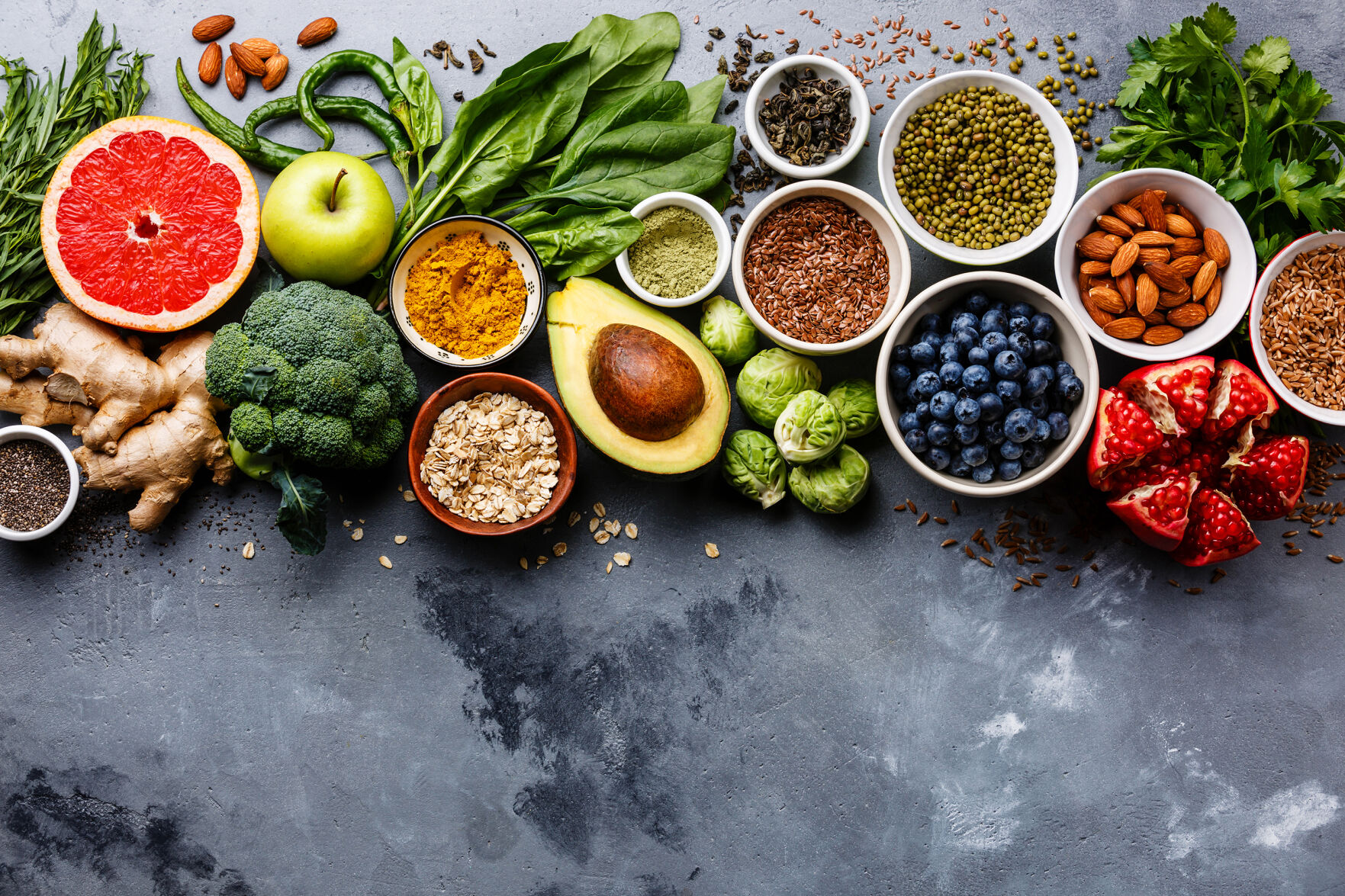
A new year often is challenging. Despite knowing we should throw out old, bad habits along with the New Year’s Eve party favors, change is hard.
Many of us eat more than we should. Yet nothing changes for the better — especially in terms of health — when we keep eating those bad-for-us-but-tasty processed junk foods that are high in sugar, salt and fat and low in nutrients.
In terms of home cooking, modifying the way you eat to improve nutrition and health is easier one dish at a time, as opposed to suddenly deciding to quit cold turkey on the likes of meat, carbs or sugar.
As someone probably told you time and again: Slow and steady often wins the race.
The food catchphrase of late is “mindful eating” — that is, paying attention with all of your senses (not just taste) to experience, enjoy and improve our relationship with food. But that’s just a start.
To help you on your 2026 food journey, here are some more practical tips that cover the basics of healthy eating and can lead to healthier choices at the grocery store. They’re paired with easy, good-for-you recipes that can be added to the weekly rotation.
All the accompanying recipes are easy to make with everyday ingredients. So no excuses.
Fiber-rich foods include fruits, vegetables, whole grains, legumes, nuts and seeds. They’re often low in fat and fill you up, as many high-fiber foods are starchy.
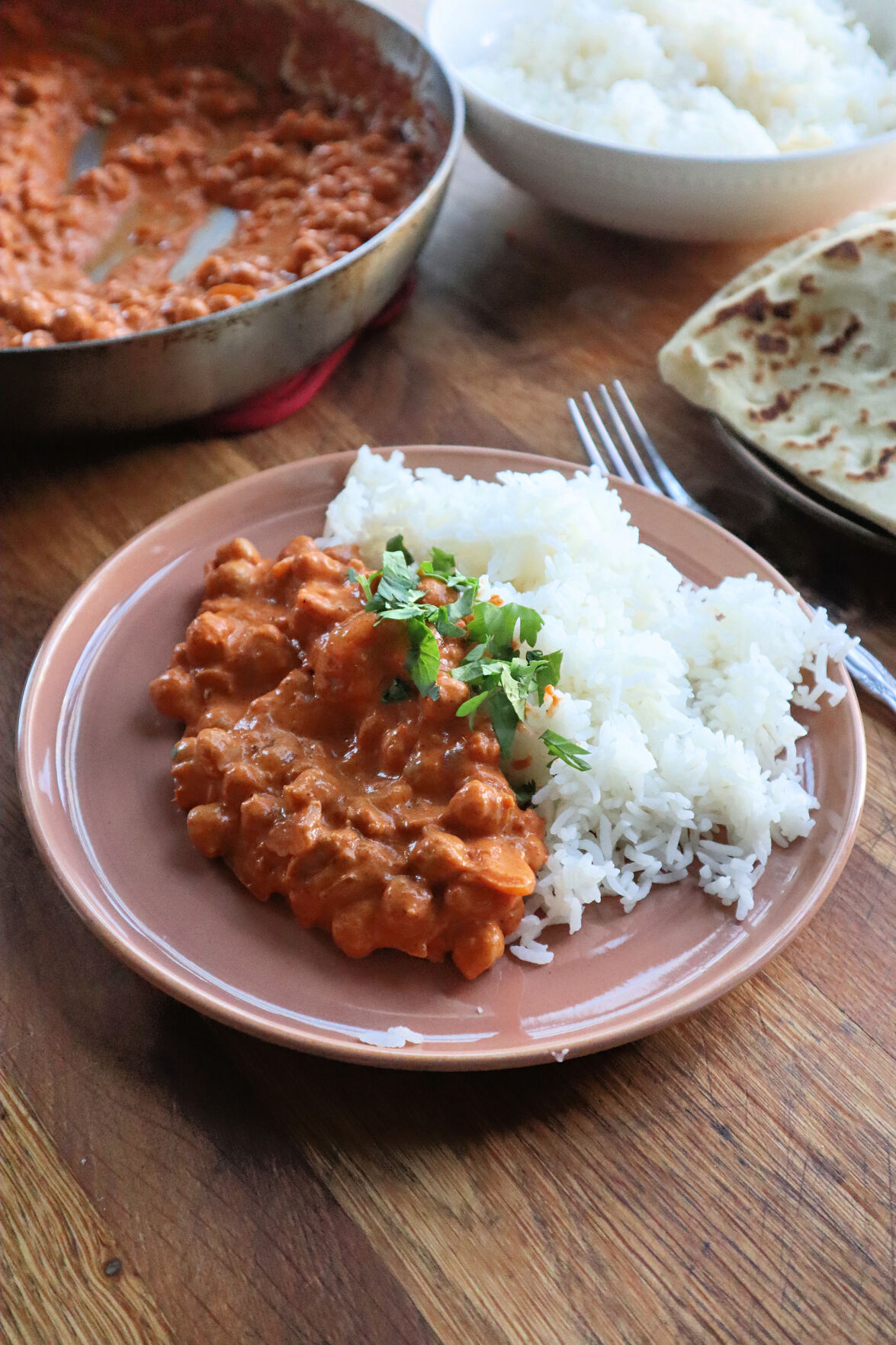
You won’t miss the chicken in this creamy vegetarian dish featuring a spiced sauce made with tomato paste, chile and ginger. The main ingredient — chickpeas — is a nutritional powerhouse that provides protein along with both soluble and insoluble fibers, making a serving (or two) excellent for gut health.
I served this dish with both steamed rice and warm naan for scooping up the flavorful gravy. If you like less spice, substitute a jalapeño for the serrano chile. It serves six.
4 tablespoons unsalted butter1 yellow onion, finely chopped1 teaspoon (or more) kosher salt, divided½ cup tomato paste½ serrano chile, seeded, finely chopped1 tablespoon grated or finely chopped peeled ginger2 (14.5-ounce) cans chickpeas, drained, rinsed1/8 teaspoon baking soda1 teaspoon garam masala1 teaspoon ground cumin1 teaspoon Kashmiri chili powder or ¾ teaspoon paprika plus ¼ teaspoon cayenne pepper1 cup heavy cream1 cup water1 tablespoon dried fenugreek leaves or kasoori methi, optional¼ cup fresh cilantro leaves, torn or coarsely choppedCooked jasmine rice or naan, for serving
In a large, high-sided skillet over medium heat, melt butter. Add onion and ½ teaspoon salt and cook, stirring occasionally, until softened, about 7 minutes. Add tomato paste and cook, stirring constantly, until darkened, 4 to 5 minutes. Add chile and ginger and cook, stirring until fragrant and tomato paste is starting to stick to bottom of pan, about 1 minute more.
Add chickpeas and baking soda and stir to combine, then add garam masala, cumin and chili powder and cook, stirring frequently, until fragrant and incorporated, about 30 seconds. Stir in cream, 1 cup water, fenugreek (if using) and remaining ½ teaspoon salt.
Bring to a simmer over medium-high heat, then reduce heat to low and continue to simmer, stirring occasionally, until sauce is reduced, 10 to 15 minutes; season with more salt, if needed. Top with cilantro.
Divide rice among bowls or plates. Spoon chickpea mixture over rice and serve.
According to U.S. guidelines, adults should aim for at least five servings of fruits and vegetables each day. That explains why our mothers and grandmothers have been urging — maybe even pleading — with us to eat more veggies for as long as anyone can remember, and always tucked a piece of fruit in our lunchboxes.
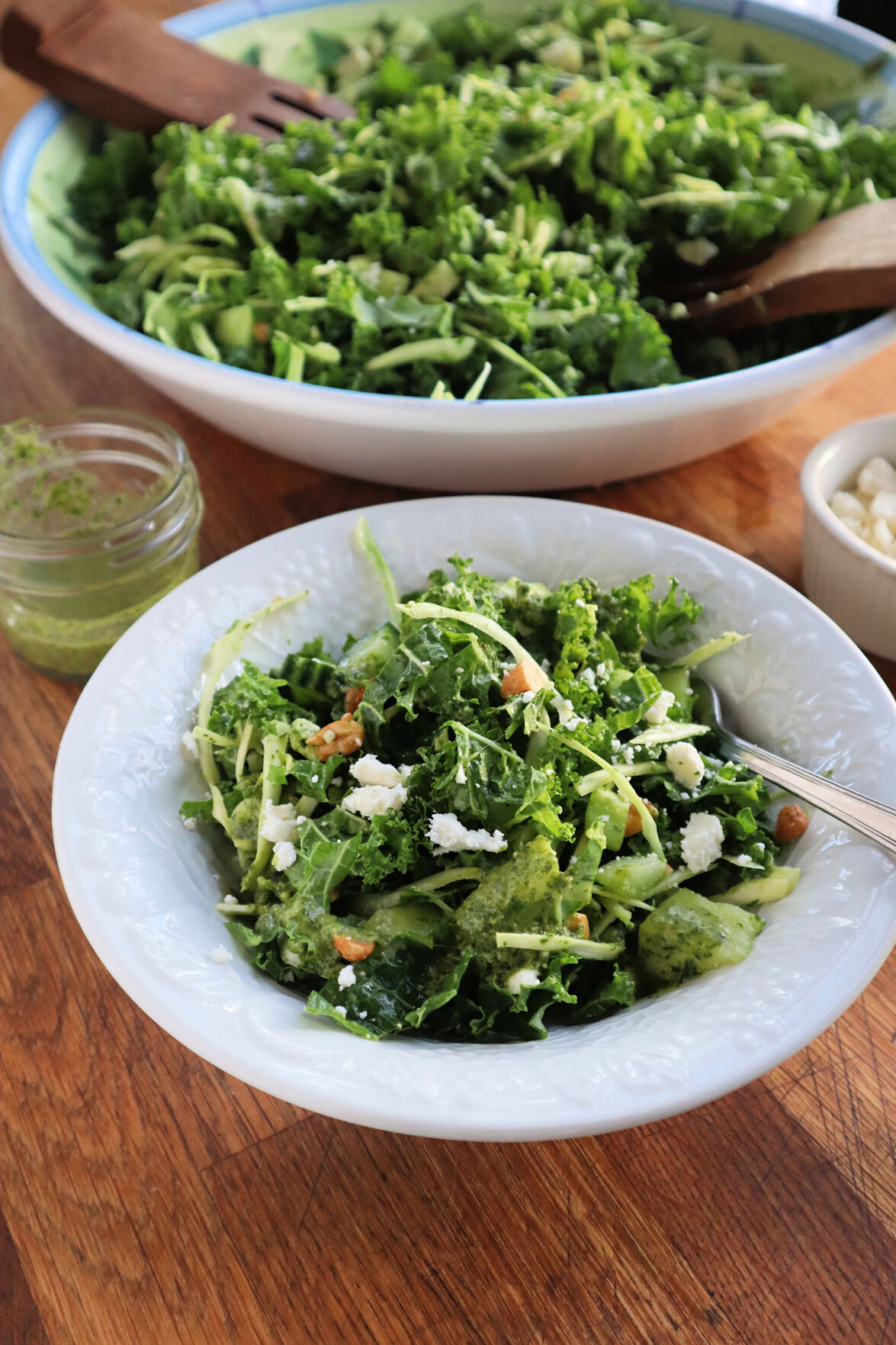
This kale salad makes it easy to make mom happy. Tossed in a zesty cilantro-lime dressing, it lives up to its name with an abundance of crunchy vegetables that taste great, don’t cost a fortune and are easy to find in any grocery store.
I added a handful of dried cherries, but Craisins would also add a touch of sweetness. If you don’t care for feta, substitute another crumbly cheese like cotija or use goat cheese (or no cheese) instead. For those with nut allergies, add pumpkin or sunflower seeds in lieu of peanuts.
For dressing
1 large bunch cilantro, roughly chopped1 garlic clove, peeled¼ cup lime juice½ teaspoon honey½ cup extra-virgin olive oilPinch of cumin, optionalKosher saltFreshly ground black pepper
For the salad
1 (10- to 12-ounce) bunch curly kale, chopped or torn into small pieces¼ small green cabbage, chopped1 Granny Smith apple, cored and diced½ seedless cucumber, diced2 stalks celery, diced3 scallions, thinly sliced1/3 cup honey roasted peanuts, roughly chopped1/3 cup dried cherries or Craisins, optional1/3 cup crumbled feta cheeseKosher salt
Make the dressing: Add cilantro, garlic, lime juice and honey to a food processor or blender. Blend until the cilantro has been chopped, then slowly stream in the olive oil until you’ve reached your desired consistency. Season to taste with cumin, if using, and salt and pepper.
Make the salad: Add kale to a large bowl along with a pinch of salt. Massage kale for 1-2 minutes until all the leaves are slightly darkened and have softened a bit. Add chopped green cabbage, apple, cucumber, celery, scallions, peanuts, cherries or Craisins (if using), and crumbled feta. Season to taste with salt. Pour over desired amount of dressing, and toss gently to combine.
Are you one of those people who always has an insulated water bottle nearby? Good for you. But just as many of us walk around each day under-hydrated. (Most people need about four to six cups of plain water each day.)
One simple way to get the fluids you need if you’re not a sipper is to eat fruit with high water content. An added benefit: Water-rich fruits like strawberries, cucumbers and oranges also provide essential vitamins, electrolytes and fiber.
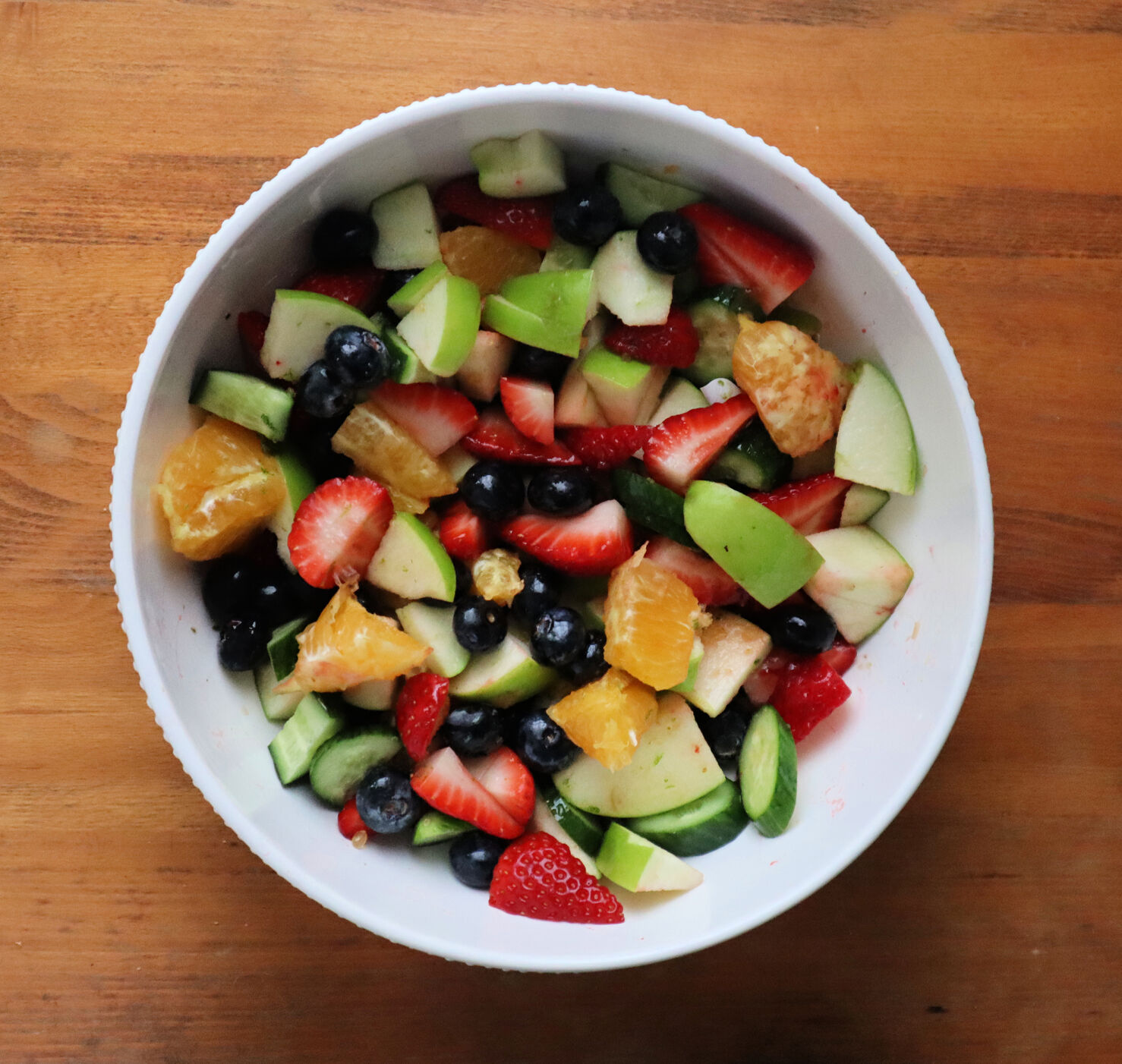
This colorful winter salad pairs five fruits with a bright honey-lime dressing. Close your eyes while eating it and you’ll swear it’s summer. It serves four to six.
For salad
1 Granny Smith apple
½
seedless cucumber1 naval orange1 cup sliced strawberries
½
cup blueberriesFor dressing
¼
cup honey1 teaspoon fresh lime zest3 tablespoons fresh lime juice
Roughly chop apple and place in a bowl. Slice the cucumbers into half-moons and toss with the apples. Slice the whole orange into wedges, removing the peel and allowing any orange juice to coat the apple and cucumber pieces. Add berries and stir gently to combine.
Prepare dressing: In small bowl whisk together honey, lime zest and lime juice until well combined.
Plate fruit and drizzle with dressing.